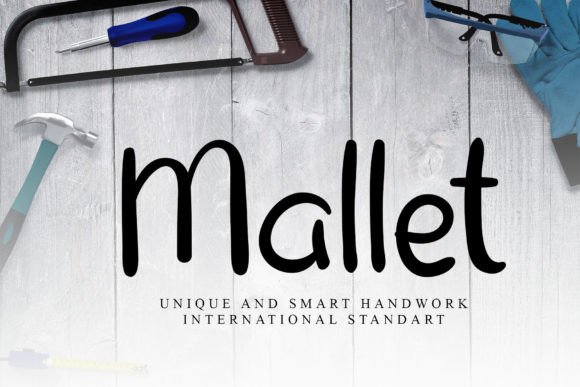
Mallet Font: Elegant Handwritten Style
There I was, staring at a blank brand board, trying to find the right tone for a new boutique coffee shop. The client wanted something warm, approachable, and a little bit refined. I scrolled through my font library, testing everything from clean sans serifs to bold display fonts, but nothing quite clicked. Then I remembered Mallet.
Mallet for Wedding Invitations and Elegant Branding
Mallet is a unique and elegant handwritten font that brings a personal touch to any design. When I first tested it on a wedding invitation mockup, the effect was immediate. The soft curves and subtle flourishes gave the text a romantic, artisanal feel that felt just right for the occasion. It’s not just about aesthetics—it’s about emotion. Mallet has a personality that can elevate a simple message into something memorable.
As a Script Handwritten font, Mallet excels in situations where authenticity matters. Whether it’s a logo, a greeting card, or a billboard, it adds a human element that digital fonts often lack. It’s especially effective when paired with a serif or modern typography system, creating a balanced visual hierarchy that feels both professional and inviting.
Mallet on Business Cards and Brand Identity
Business cards are often the first impression a brand makes. I used Mallet on a business card for a small skincare line, and it worked surprisingly well. The font’s fluidity complemented the brand’s organic, natural vibe without overwhelming the design. It stood out as a strong, readable headline while still feeling approachable.
For brand identity projects, Mallet is best used as a display or accent font. It’s not ideal for long paragraphs, but as a logo font or headline, it shines. I found that it pairs well with a clean sans serif for body text, allowing the handwritten style to take center stage without competing with itself.
Mallet for Packaging Design and Product Labels
When working on a bakery packaging project, I tried Mallet on a label for a custom cake box. The result was charming—each letter seemed to have its own character, giving the product a handmade quality that resonated with the target audience. It’s perfect for brands that want to convey craftsmanship and care.
That said, Mallet isn’t always the best choice for every packaging design. In smaller sizes, the details can get lost, making it less legible. For products with a more formal or corporate image, a different font might be more appropriate. But for creative studios, handmade shops, or local restaurants, Mallet offers a fresh and authentic alternative.
Mallet in Web Design and Social Media Graphics
I also tested Mallet on a website header for a creative studio. The font added a sense of movement and energy, which matched the brand’s dynamic, forward-thinking ethos. On social media, it worked well as a headline for posts, drawing attention without being too flashy.
Webfont availability is an important consideration. If Mallet supports webfont formats, it can be used effectively in digital assets like landing pages, email headers, or Instagram stories. However, if it’s only available as a desktop font, its use in online projects may be limited. Always check licensing before using it in client work or commercial applications.
Mallet for Logos and Visual Branding Systems
Logos are where Mallet really comes into its own. I created a logo draft for a boutique identity project using the font, and it immediately gave the brand a distinct, personal flair. The swashes and ligatures added a level of sophistication that made the logo feel more intentional and curated.
One thing to keep in mind is that Mallet works best with short phrases. Long headlines or taglines can feel cluttered, so it’s best to use it sparingly. When combined with a complementary typeface, it can create a cohesive and visually appealing brand system that stands out in a crowded market.